



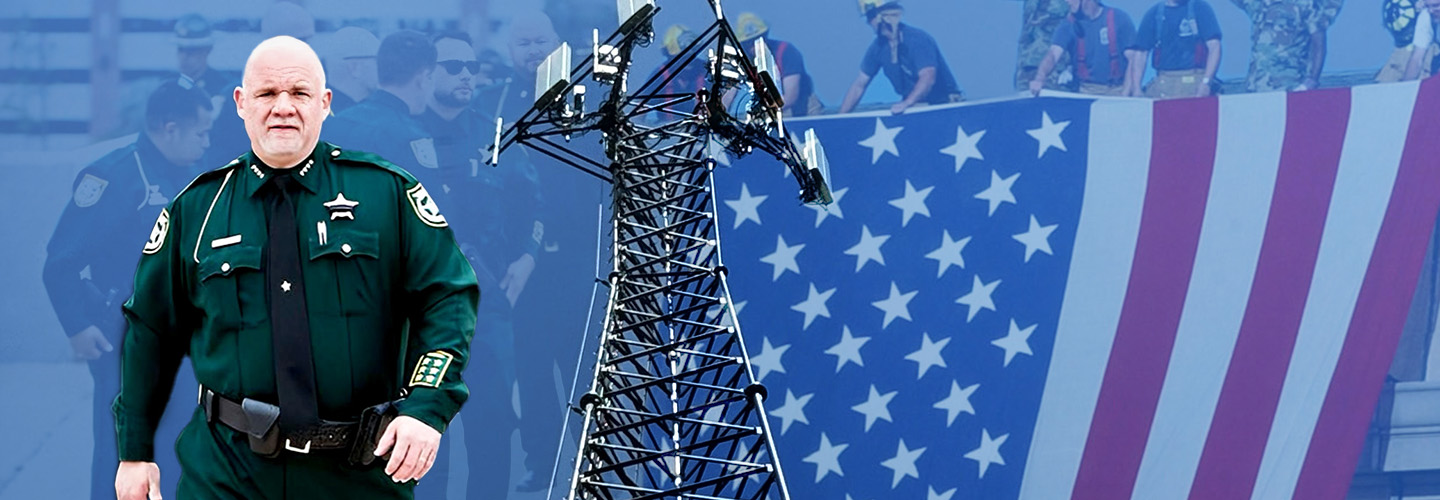
This blog is a repost from the Tallahassee Democrat, originally published on September 10, 2026.
Twenty-five years ago, our nation experienced the deadliest terrorist attack in our history. Nearly 3,000 lives were lost on Sept. 11, 2001.
Like all Americans, I will never forget where I was and what I was doing that day. I started that Tuesday morning in Tallahassee, putting on my police uniform, when I learned what was unfolding in New York City, Pennsylvania, and around our nation's capital.
At the police station that day, my fellow officers and I watched as firefighters, police officers, EMTs, and other first responders rushed toward danger to help others escape it. Many were still inside the World Trade Center when the towers fell. Others ran into the rubble, searching for survivors and caring for the injured.
In the hours and days that followed, thousands of first responders answered the call at Ground Zero in New York, the Pentagon, and the fields of Shanksville. Their courage and sacrifice are an enduring part of the story of September 11th.
The response to 9/11
In the aftermath of September 11th, our nation examined what happened and what needed to change. Congress established the 9/11 Commission to study the attacks and recommend steps to make the country safer.
A key finding that emerged was the need to improve our nation’s emergency communications. The response to 9/11 showed that our existing telecommunications infrastructure was not enough to support first responders during a crisis of this magnitude. First responders from different agencies and jurisdictions needed a better way to talk to each other during major emergencies.
Public safety leaders spent the following years advocating for dedicated spectrum and a nationwide communications network built around their needs. In 2012, Congress acted on their vision, establishing the First Responder Network Authority and directing it to oversee the creation of a nationwide broadband network dedicated to public safety.
The attacks on Sept. 11, 2001, revealed vulnerabilities our nation did not anticipate. In response, we reshaped security organizations, policies, counterterrorism strategies, communications technologies, and more. The creation of FirstNet was one part of a much broader nationwide response to apply the lessons of September 11 and better prepare the country for future emergencies.
A network and responsibility for public safety
Today, FirstNet provides public safety with a nationwide communications platform built specifically for their mission. It spans nearly 3 million square miles across urban, suburban, rural, and tribal lands.
First responders use the network every day, in every state and territory — not only during major disasters, but during traffic stops, fires, medical emergencies, severe weather, large public events, and daily operations.
Our work is not done. As technology changes and public safety needs evolve, the FirstNet Authority will continue to listen to and work with first responders to ensure the network evolves with them.
As chair of the FirstNet Authority Board in Reston, Virginia, and as someone who has spent my career in law enforcement, I believe we have a responsibility to those who serve. We owe it to those who responded on September 11th — and to every first responder who has answered the call since — to ensure they have the reliable communications tools they need when lives are on the line.
Twenty-five years later, we remember — above all — those who lost their lives. We hope our nation never experiences an event like 9/11 again. But we must never forget the lessons of that day — and our responsibility to the nation’s first responders and the communities they serve.