



This blog is a repost from the APWA Reporter, originally published in August 2026.
For transportation agencies, communication is critical to keeping roads open, crews safe, and operations moving, especially in rural states where terrain and distance can challenge traditional networks.
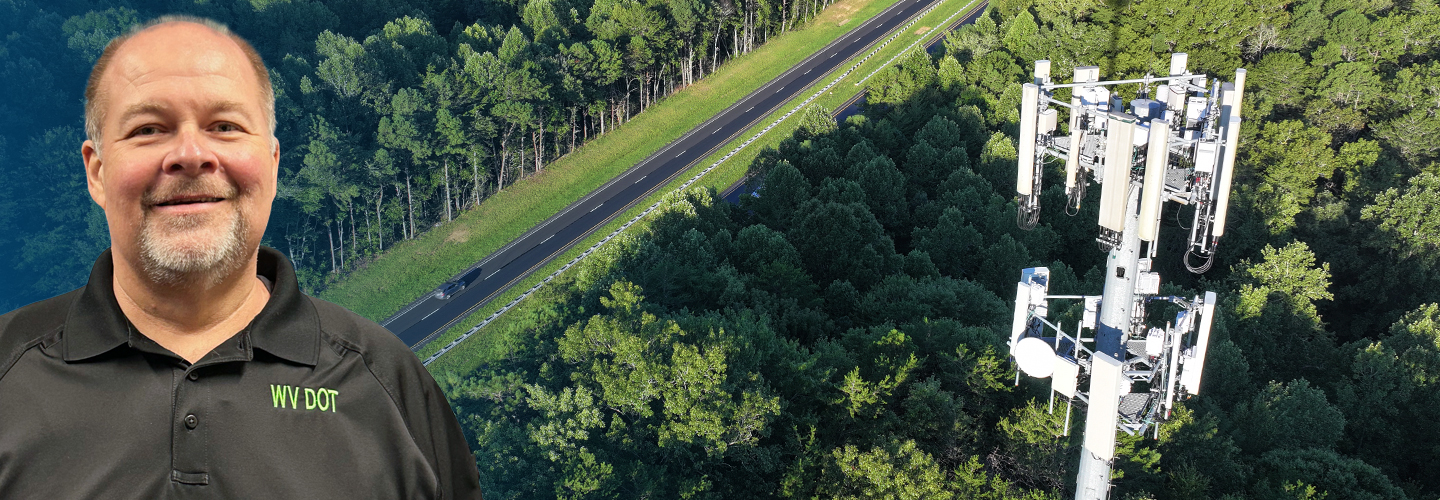
At the West Virginia Department of Transportation (WVDOT), Assistant Secretary Scott Eplin says the agency has found a powerful complement to its existing communications systems in FirstNet — a nationwide public safety broadband network built through a public-private partnership between the First Responder Network Authority (FirstNet Authority) and AT&T.
Today, WVDOT uses the FirstNet network to support a wide range of transportation operations — from highway maintenance to construction oversight — helping crews stay connected and safe while working across the state’s mountainous terrain.
Expanding communication across the workforce
WVDOT personnel use hundreds of FirstNet-enabled devices, including smartphones and data devices, across the state.
For Eplin, the key benefit is flexibility. Rather than replacing existing radio systems, FirstNet allows the department to extend communications to more workers and more situations.
“We stress that we’re not replacing our land mobile radio system,” he explained. “We’re supplementing it and adding another tool in the toolbelt.”
Using push-to-talk (PTT) on FirstNet, crews can communicate in a way that mirrors traditional radio use while also gaining the advantages of broadband connectivity. PTT allows for secure voice communications as well as messaging and location-based data sharing.
With radio and broadband systems available, the agency strategically allocates its communications resources so more crews have access to communications. For example, in areas with strong cellular coverage, such as along major expressways, crews use FirstNet-enabled devices for communications. This allows traditional radio equipment to be redeployed to more remote areas where cellular coverage is limited.
Supporting safety in the field
Transportation operations often involve crews working across long distances, in hazardous environments, or during severe weather. During emergencies, transportation crews become a critical component in public safety response. It is crucial for these crews to be able to communicate and stay connected with public safety partners as they manage their response.
FirstNet devices help WVDOT maintain communications in these scenarios.
The agency has deployed devices to support:
- Construction inspectors, who use mobile devices to scan and transmit project documentation
- Highway maintenance teams, including crews operating along major roadways
- Traffic flaggers, who require reliable communication across extended work zones
- Operational events and safety training activities
For some workers, the department uses simplified push-to-talk devices that function similarly to walkie-talkies.
“For our flaggers in long work zones, communication is critical,” Eplin said. “We can hand them a device that works like a radio so they can focus on their job and communicate safely.”
This approach ensures workers who do not need full smartphone capabilities can still maintain reliable communications.
Integrating technology into daily operations
WVDOT has integrated FirstNet devices into the equipment used by transportation crews.
The agency also has plans to integrate FirstNet into vehicles to further enhance operations. By installing mounting cradles in work vehicles such as salt spreaders, workers will be able to operate the devices much like traditional radio microphones. This will allow crews to communicate without dramatically changing their workflow.
Eplin says maintaining familiar operational patterns helps overcome resistance that sometimes comes with introducing new technology.
“Humans resist change,” he said. “So, we emphasize that it’s not replacing what they use today. It’s simply another tool.”
Deployable coverage when it matters most
West Virginia’s rugged terrain can create communications challenges in remote areas. During major incidents or planned events, WVDOT has leveraged FirstNet deployable assets to bring connectivity where permanent infrastructure is limited.
Deployable systems can be rapidly positioned to provide temporary cellular coverage.
For example, the department used a deployable to support a large safety training event held in a location without reliable service, enabling digital scoring systems and operational communications.
Deployables have also proven valuable during emergency incidents, helping restore connectivity for responders operating in areas with limited network access.
A flexible, cost-effective approach
Another advantage for WVDOT is the ability to tailor services to the agency’s operational needs.
Rather than committing to large, fixed technology investments, the department can pilot solutions across several districts before expanding their use statewide.
“If we decide something doesn’t work, it’s not like we’ve made a huge financial investment and we’re stuck with it,” Eplin said. “We can simply turn that service off.”
This flexibility has allowed the agency to explore new ways of using broadband communications while controlling costs.
A complement to existing systems
After decades of working in transportation, Eplin believes the most effective communications strategy is one that uses multiple tools together.
Traditional radio systems remain essential, especially in remote areas. But broadband connectivity through FirstNet allows agencies to extend communications capabilities to more workers and operational scenarios.
For WVDOT, the combination is helping modernize communications while keeping the focus on what matters most: safety.
“Safety is the driving force,” Eplin said. “The more tools we have available to keep our people connected and safe, the better.”